According to Seafood Watch, here are six fish that are healthy for you and the planet.
1. Albacore Tuna (troll- or pole-caught, from the US or British Columbia)
Many tuna are high in mercury but albacore tuna–the kind of white tuna that’s commonly canned–gets a Super Green rating as long as (and this is the clincher) it is “troll- or pole-caught” in the US or British Columbia. The reason: Smaller (usually less than 20 pounds), younger fish are typically caught this way (as opposed to the larger fish caught on longlines). These fish have much lower mercury and contaminant ratings and those caught in colder northern waters often have higher omega-3 counts. The challenge: You need to do your homework to know how your fish was caught or look for the Marine Stewardship Council (MSC) blue eco label.
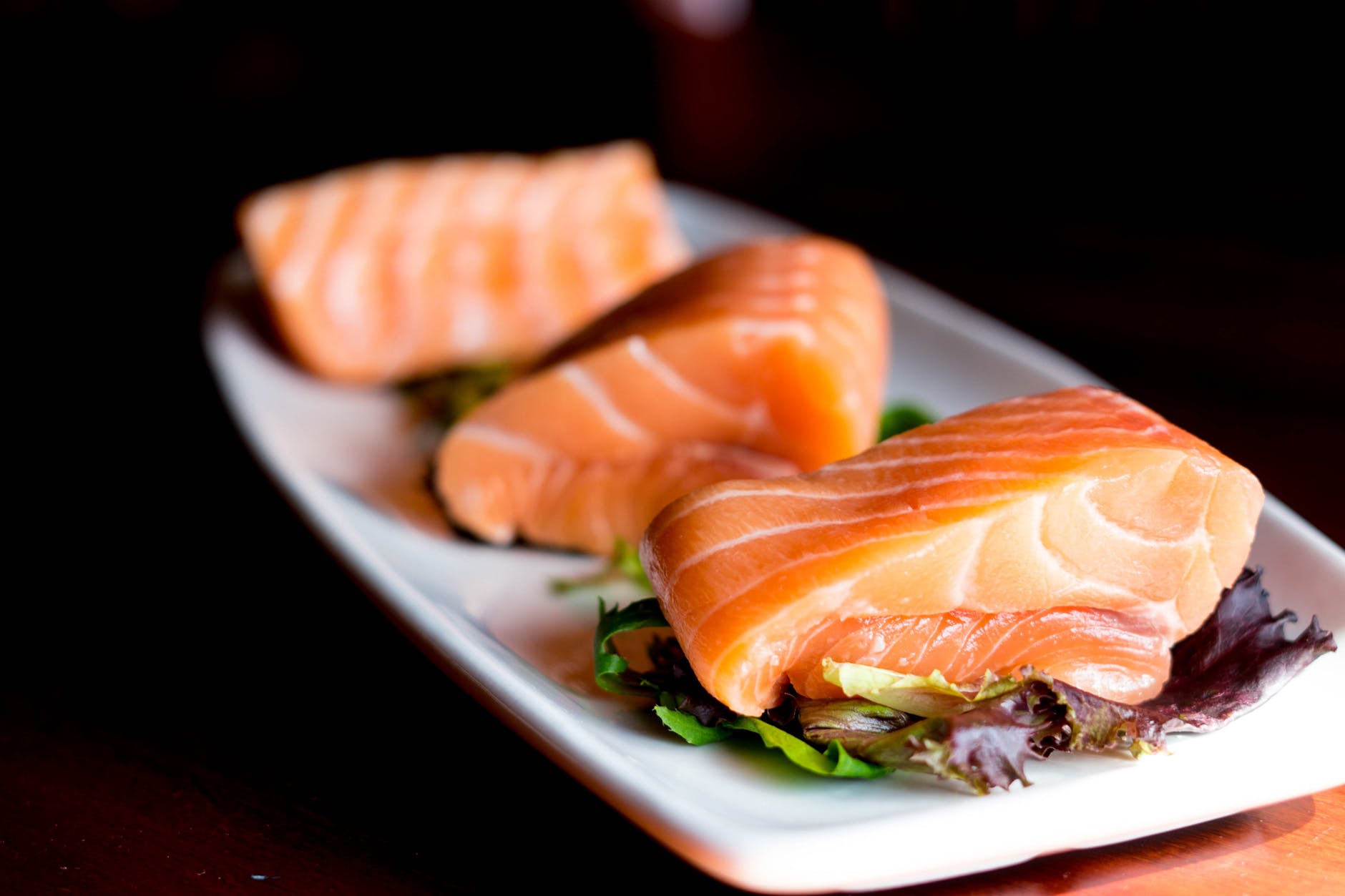
2. Salmon (wild-caught, Alaska)
To give you an idea of how well-managed Alaska’s salmon fishery is, consider this: Biologists are posted at river mouths to count how many wild fish return to spawn. If the numbers begin to dwindle, the fishery is closed before it reaches its limits, as was done recently with some Chinook fisheries. This close monitoring, along with strict quotas and careful management of water quality, means Alaska’s wild-caught salmon are both healthier (they pack 1,210 mg of omega-3s per 3-ounce serving and carry few contaminants) and more sustainable than just about any other salmon fishery.
3. Oysters (farmed)
Farmed oysters are good for you (a 3-ounce serving contains over 300 mg of omega-3s and about a third of the recommended daily values of iron). Better yet, they are actually good for the environment. Oysters feed off the natural nutrients and algae in the water, which improves water quality. They can also act as natural reefs, attracting and providing food for other fish. One health caveat: Raw shellfish, especially those from warm waters, may contain bacteria that can cause illnesses.
4. Sardines, Pacific (wild-caught)
The tiny, inexpensive sardine is making it onto many lists of superfoods and for good reason. It packs more omega-3s (1,950 mg!) per 3-ounce serving than salmon, tuna, or just about any other food; it’s also one of the very, very few foods that’s naturally high in vitamin D. Many fish in the herring family are commonly called sardines. Quick to reproduce, Pacific sardines have rebounded from both overfishing and a natural collapse in the 1940s.
5. Rainbow Trout (farmed)
Though lake trout are high in contaminants, nearly all the trout you will find in the market is farmed rainbow trout. In the US, rainbow trout are farmed primarily in freshwater ponds and “raceways” where they are more protected from contaminants and fed a fish meal diet that has been fine-tuned to conserve resources.
6. Freshwater Coho Salmon (farmed in tank systems, from the US)
Freshwater coho salmon is the first–and only–farmed salmon to get a Super Green rating. All other farmed salmon still falls on Monterey Bay Aquarium’s Seafood Watch “avoid” list for a few reasons. Many farms use crowded pens where salmon are easily infected with parasites, may be treated with antibiotics, and can spread disease to wild fish (one reason Alaska has banned salmon farms). Also, it can take as much as three pounds of wild fish to raise one pound of salmon. Coho, however, are raised in closed freshwater pens and require less feed, so the environmental impacts are reduced. They’re also a healthy source of omega-3s–one 3-ounce serving delivers 1,025 mg.
Nov 16, 2018, By Brierley Wright
 𝖂𝖊𝖘𝖙 𝕳𝖊𝖆𝖑𝖙𝖍